

The 8 Stages of Skydiving: From Should I? to I Did It!
There's something about skydiving that captures the imagination—an ultimate test of courage, freedom, and trust. But skydiving isn't just a moment—it's a whole journey that starts long before your feet leave the ground. Here's a deeper dive into the eight emotional, mental, and physical stages you'll go through when Skydiving for the first time.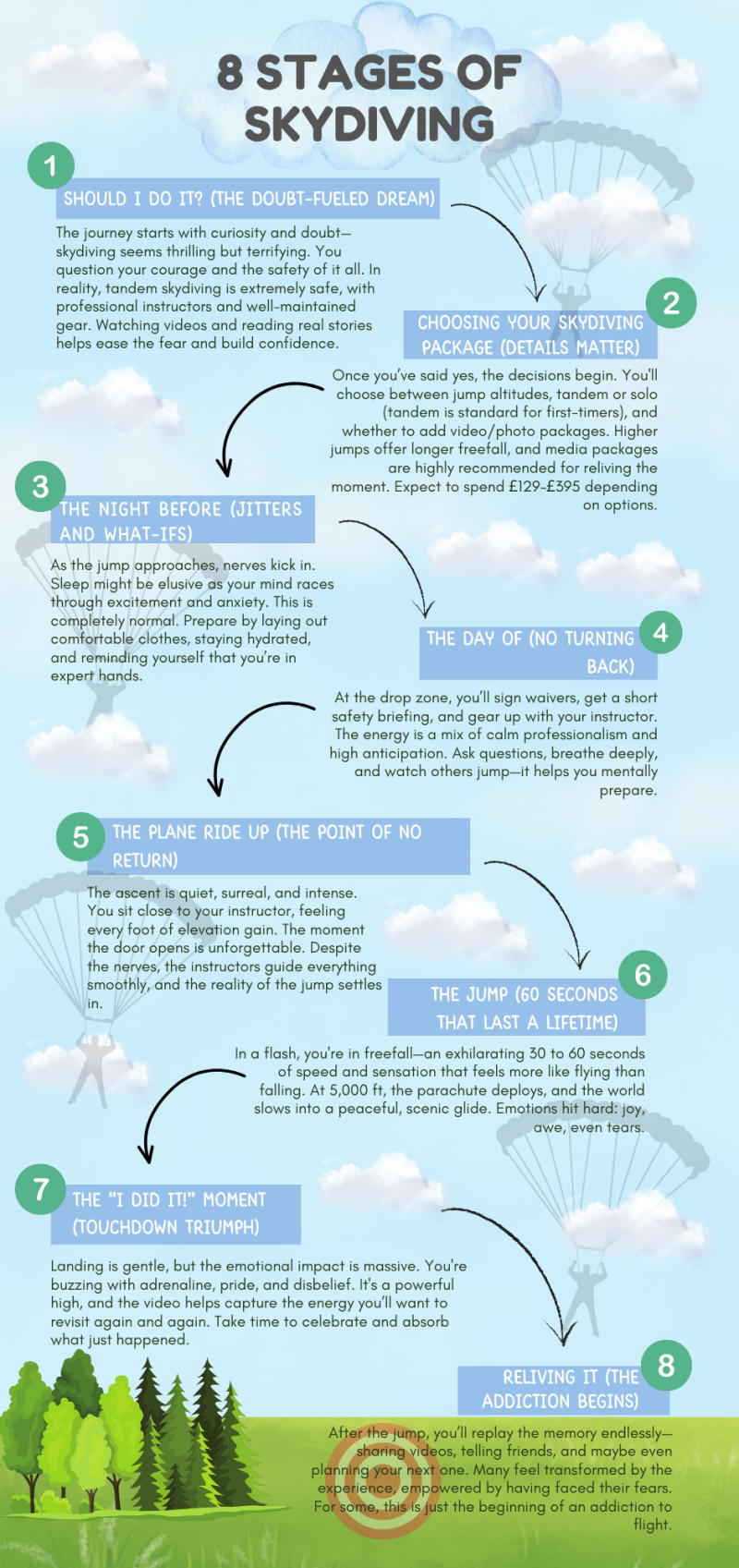
This is where it begins—the flicker of an idea, maybe from a bucket list, a dare, or a desire to shake up your routine. You're curious, maybe even excited, but equally scared. The idea feels bold. Dangerous. Amazing.
You'll probably ask yourself:
- Is it safe?
- Will I panic?
- What if something goes wrong?
- Am I the type of person who does this?
Reality Check:
Statistically, tandem skydiving is incredibly safe. The gear is high-tech and inspected constantly, instructors are professionals with thousands of jumps, and drop zones follow strict safety regulations. Most people who skydive once say it was one of the best decisions they've ever made.
Action Step:
Start small. Follow local drop zones on Instagram, read FAQs, and watch tandem jump videos from people who are just as nervous as you are.
Once you've committed, it's time to pick a package. Here's what to consider:
Jump Height:
Common options include 7,000 feet, 10,000 feet, 12,000 feet, or 15,000 feet. The higher you go, the longer the free fall.Tandem vs. Solo:
First-timers almost always do tandem. Solo jumping requires hours of ground training and passing a class (AFF – Accelerated Freefall).Photos and Video:
Most places offer GoPro footage (attached to your instructor's hand), a separate photographer who jumps with you, or both.
Pro Tip:
Always opt for the media package. Your brain will be overloaded during the jump—you'll want something to relive it afterwards.
Cost Range:
Expect to pay £129–£395 for a tandem jump, with extra for higher altitudes or media packages. Book early if you're planning for a weekend or special event.
Sleep? Maybe. More likely, your brain will go into overdrive with questions like:
- What did I sign up for?
- Should I cancel?
- Is this safe?
This is 100% normal. Even seasoned skydivers still feel adrenaline the night before. You may experience a mix of excitement and dread.
What Helps:
- Prepare your clothes (athletic wear and sneakers).
- Drink water, eat light, and avoid caffeine overload.
- Remind yourself: you're not jumping alone. You're in the hands of an expert who has done this thousands of times.
You arrive at the drop zone, check in, and start the process. Expect:
Waivers:
You'll sign a bunch of legal forms.Briefing:
A quick rundown of body position, safety, and what to expect. Tandem jumps don't require hours of prep—just basic instruction.Gear Up:
You'll be fitted with a harness, goggles, and maybe a jumpsuit.
The vibe here is usually a mix of chill and buzzed adrenaline. Instructors often keep things upbeat to help settle nerves.
What to Do:
- Ask questions if you're unsure.
- Breathe. Move around to shake out nerves.
- Watch others take off and land—it helps normalize the process.
Once you're suited up, you'll board the plane in groups. It's a small aircraft with benches or floor seating. This part is slow, quiet, and electric with anticipation.
You'll Probably Feel:
- A surge of anxiety
- A weird calmness
- A hyper-awareness of every sound and movement
At 5,000 ft, your instructor might check your harness and crack a joke. At 10,000 ft, you start seeing the earth from a whole new angle. At 13,000 or 15,000 ft… the door opens.
What to Remember:
- You won't be pushed out. You'll go with your instructor, who moves you both as a team.
- It'll feel more like flying than falling—especially in freefall, where wind resistance creates a floating sensation.
You edge toward the door. There's a pause—and then you're gone.
Freefall:
30 to 60 seconds of 120 mph bliss. It's loud, fast, and absolutely wild. You won't feel like you're falling—more like weightless flying.Parachute Deployment:
At around 5,000 feet, the chute opens, and everything slows to a gentle glide.The Canopy Ride:
You'll float for 4–7 minutes, with your instructor pointing out landmarks or letting you steer.

