

From Wright to Flight Sim: How Planes Evolved Through the Years
15 May 2025
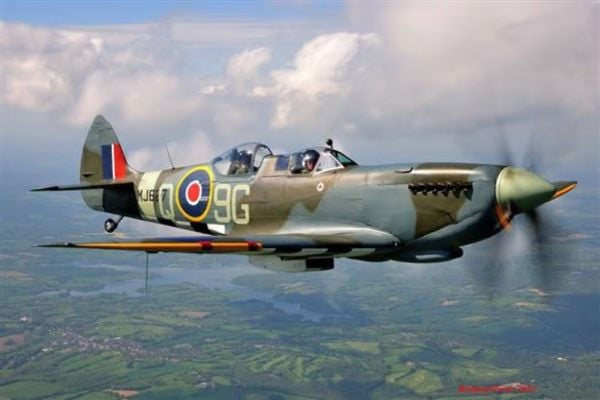
Let’s be real - flight is one of those things that’s so normal now, we forget how completely insane it is. You're literally sitting in a metal tube, sipping overpriced coffee, zooming through the sky at 800km/h, and barely anyone bats an eye. But rewind a bit, and humans couldn’t even dream of flying across a county, let alone halfway round the world.
So, here’s a look back - not too heavy, a bit nerdy, and very cool - at how flight evolved from stick-and-cloth planes to the electric-powered jets of the future.
1903: Where It All Took Off
The Wright brothers weren’t the only ones trying to get airborne, but they were the first to pull it off properly. On 17 December 1903, their aircraft, the ‘Flyer’, managed a 12-second flight over 36.5 metres in North Carolina. Doesn’t sound like much, but it was the first powered, controlled flight in history - and that’s huge.
The Flyer had a 12.3m wingspan and a 12 horsepower engine. Think lawnmower power levels - and yet, it worked. No pressurised cabins, no seatbelts, just a lot of hope and canvas.
The War Era: Planes Get Serious
When World War I kicked off in 1914, planes had only existed for a decade, but the military immediately saw potential. Early warplanes were basically scouts - slow, unarmed, and often untrusted. But within a few years, they had guns, better engines, and pilots became flying aces.
Famous WWI planes:
Sopwith Camel - British biplane, famous for its agility.
Fokker Dr.I - German triplane flown by the Red Baron.
SPAD S.XIII - A French workhorse with a 220hp engine.
By WWII, the aviation industry had absolutely levelled up. Planes were faster, stronger, and had specialised roles: bombers, fighters, transport aircraft, you name it.
Famous WWII planes:
Supermarine Spitfire - Agile and iconic, helped win the Battle of Britain.
Messerschmitt Bf 109 - Germany’s most produced fighter.
B-17 Flying Fortress - Heavy American bomber, could take a beating and keep going.
P-51 Mustang - Long-range fighter, great for escorting bombers deep into enemy territory.
Aircraft production during WWII was off the charts - over 300,000 aircraft were built in the US alone during the war years.
Jet Age and Civil Aviation Boom
After the war, the jet engine changed the game. Britain’s de Havilland Comet launched in 1952 as the world’s first commercial jetliner - although, to be fair, it had some teething problems (the first models had structural issues at high altitude). Still, the future was here.
Then came the Boeing 707 in 1958, and that’s when long-haul flight really became mainstream. Airports expanded, people started holidaying abroad, and the golden age of air travel began (with uniforms, cocktails, and probably too much smoking on board).
Popular post-war aircraft:
Boeing 707 - The jetliner that made transatlantic travel routine.
Concorde - A literal icon. Supersonic commercial flight. London to New York in 3.5 hours.
Douglas DC-3 - A legend from the 1930s that stuck around for decades, used for passengers and cargo.
Modern Flight: Smart, Fast, and (Hopefully) Sustainable
These days, aircraft are insanely advanced. We’ve got:
Fly-by-wire systems (computers instead of mechanical controls),
Composite materials (lighter and stronger than old aluminium bodies),
And cockpits that look more like gaming setups than anything else.
The Boeing 787 Dreamliner and the Airbus A350 are two of today’s top long-haul jets - quieter, more fuel-efficient, and way more comfortable than the stuff we had 30 years ago.
Then there’s the rise of electric and hybrid aircraft. Companies like Eviation (Alice) and Vertical Aerospace are developing all-electric planes for short hops - think 9-seaters or city-to-city transport. It’s early days, but it’s exciting (and much needed, considering aviation emissions).
Simulators, Drones, and the Future of Flight
And let’s not forget flight simulators. Modern sims like the ones used by actual pilots can replicate nearly every detail - weather, engine malfunctions, turbulence. And for the rest of us, there’s Microsoft Flight Simulator 2020, which lets you fly literally anywhere on Earth from your PC with scary realism.
We’ve also got:
Military drones flying missions without pilots.
VTOL aircraft (Vertical Take-Off and Landing) in development for air taxis.
And even pilotless commercial flights on the horizon - though let’s be honest, most people probably still want a human in the cockpit for now.
Final Thoughts: From Dreams to Jets in Just Over 100 Years
It’s kind of insane that in just over a century, we went from barely getting airborne to crossing the world in under a day - or flying autonomous drones using touchscreens.
From the Flyer to the Dreamliner, the evolution of flight has been anything but boring. And with everything going electric, AI-driven, and potentially even commercial trips to space (no thank you), it’s clear we’re still only mid-flight in the story of aviation.
If you’d like to experience the thrill of flight for yourself – whether you’re drawn to the charm of vintage aviation or the cutting-edge world of modern aircraft - why not take it to the skies? Book a ride in a Classic Warbird, try your hand at a state-of-the-art Flight Simulator, or even take a Flying Lesson in our fully electric training aircraft. It’s the perfect way to bring the history of flight to life - or get a feel for its future.
Like this blog? Why not read some related blogs to this one:

