

What Really Happens on a FlyDays Skydiving Experience Day
10 October 2025
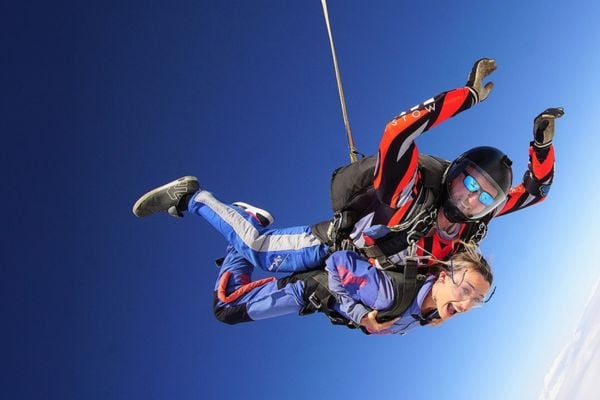
Ever thought: "What's it actually like to throw yourself out of a perfectly good plane?" You're not alone. Skydiving is one of those bucket-list experiences that sounds completely bonkers at first, then somehow ends up being one of the most exhilarating things you'll ever do. So here's the step-by-step of what actually happens when you sign up for a skydive, from nervous pre-flight jitters right through to that triumphant landing on solid ground.
The Build-Up
First things first, you need to decide on the type of jump. There are two main flavours to choose from. The most popular is the tandem skydive, where you are securely strapped to a qualified instructor who does all the important work - checking the equipment, pulling the chute, steering, and making sure you do not flap about like a fish on a washing line. All you really need to do is enjoy the ride, which is handy when you're thousands of feet in the air.
Then there is the static line parachute jump, which is for the braver (or slightly madder) types. In this one, you still leap out of the aircraft solo, but instead of worrying about when to pull the cord, your parachute is attached to the plane by a line. As you exit, the line pulls the chute open automatically. This gives you that feeling of independence without the awkward "oh dear, I forgot to open it" scenario.
These jumps take place at specialist drop zones across the UK, from Kent to Cambridgeshire, Suffolk, County Durham and beyond. Each location has its own quirks - different scenery, different heights, and in some cases, even coastal views. Choosing where to jump can be half the fun, though let's be honest, wherever you do it, the ground is still quite a long way down.
You'll also choose the altitude. Jumps can start from around 7,000 feet, but if you fancy really milking the experience, you can head up beyond 15,000 feet. The higher you go, the longer the free-fall. That means more time to scream, laugh, or shout something vaguely heroic before gravity does its thing.
The Free-Fall
After some safety briefings and a bit of kit-fitting, you'll board the aircraft. It is usually a light plane, though sometimes other types are used. The aircraft climbs to your chosen altitude, during which time you'll likely question your life choices more than once. Then the door opens, the wind roars in, and before you know it - you're out.
This is the bit people talk about for years afterwards: the free-fall. If you're tandem, your instructor takes the lead while you're strapped securely to them. If you're doing a static line, the parachute opens as you leave the plane, so you do not get that prolonged free-fall sensation. But for tandem skydivers, this is where the adrenaline truly kicks in.
You hurtle through the air at speeds of up to 190 kilometres per hour, which is roughly 120 miles per hour. It is a bizarre feeling - part rollercoaster, part "I may never stop grinning again." The rush of wind, the sense of speed, and the sheer reality of plummeting towards Earth combine into a cocktail of pure exhilaration. Some people laugh uncontrollably, others scream, and a few go silent as their brain tries to process what on earth is happening.
The Chute Opens
After what feels like both a lifetime and five seconds, the parachute deploys. One second you are falling faster than a stone dropped off a bridge, the next you are gently gliding, like a leaf on the breeze. The sudden change in pace is dramatic - you slow from motorway speeds down to around 20 miles per hour.
Once the chute is open, everything changes. The noise of rushing air gives way to a strange sort of calm. You can suddenly hear again, you can breathe properly, and you have the luxury of looking around instead of focusing on not panicking. This is where you get to appreciate the view. From that height, the countryside stretches for miles in every direction, patchworks of fields, winding rivers, towns, and sometimes even the glint of the sea on the horizon.
It is not just about the view though. That serene glide gives you a chance to process what you've just done. You've literally jumped out of a plane. The hard part is over, and now you can savour every last moment of floating gently towards the earth.
The Landing
As you descend lower and lower, the ground begins to rush up, though not nearly as alarmingly as it did during free-fall. If you're on a tandem jump, your instructor is still handling the controls, so you can relax and let them steer you into the landing zone. They'll also give you a heads-up on how to position yourself for a smooth touchdown. Usually it's a simple case of lifting your legs up and letting them take the impact.
For static line jumpers, you may get a bit more responsibility in steering your parachute. The canopy is fairly simple to control with the toggles, and instructors make sure you know what to do before you ever leave the ground. Either way, the landing is generally far gentler than people imagine. In fact, it's more of a soft slide or a hop than a dramatic crash.
Once you're back on solid ground, the relief and exhilaration hit all at once. Most people cannot stop smiling. Some want to go straight back up and do it again, others declare it the most terrifying and brilliant thing they've ever done. Either way, it sticks with you.
Rules and Requirements
Of course, there are a few sensible rules in place. To take part in a skydive in the UK, you need to be at least 16 years old. If you're under 18, you'll also need written permission from a parent or guardian. It is also worth remembering that skydiving is very weather-dependent. High winds, heavy rain, or poor visibility can mean jumps are delayed or rescheduled. Safety always comes first, and while that might mean a bit of waiting around, it's better than trying to parachute through a thunderstorm.
Why Do It?
Skydiving is one of those experiences that is almost impossible to explain until you do it yourself. It is a mixture of fear, excitement, adrenaline, and sheer joy. The free-fall alone is worth it, but when you add the incredible views, the sense of achievement, and the bragging rights afterwards, it becomes something you'll never forget.
Tandem jumps mean you do not need any prior training, just a willingness to take the plunge. Static line jumps give you more control if you want to be a bit more hands-on. Whichever you choose, the result is the same: an unforgettable adventure that will leave you buzzing for days.
If you're interested in trying skydiving out, why not head over to our Skydiving Experience Page and see what jumps are waiting for you?

