

Everything You Need to Know About Commercial Flight
23 July 2025
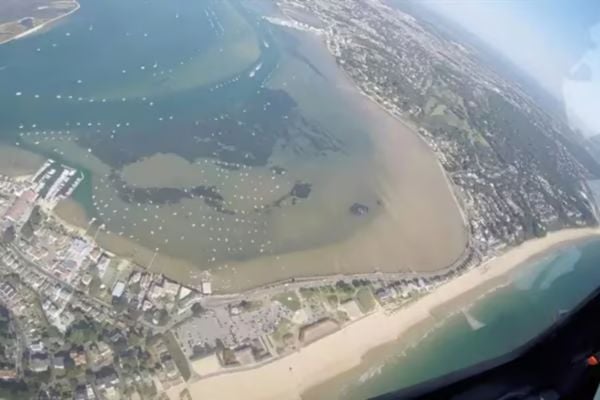
Let's be honest, the idea of hurling through the sky in a tin can with wings at 35,000 feet sounds utterly bonkers if you really think about it. Yet somehow, we've turned flying into something almost as mundane as taking the bus (albeit with slightly more screaming toddlers and overpriced sandwiches).
But where did it all begin, where are we now, and what does the future look like? Buckle up, put your tray table in the upright position, and let's take off into the wild, wonderful world of commercial flight.
Once Upon a Time in the Sky…
Our story begins not with Ryanair's £9 flights to Prague, but with the Wright brothers in 1903. They managed a 12 second flight that covered 120 feet - about as long as your average airport security queue. While their plane, 'The Flyer', was essentially a flying bicycle with a lawnmower engine, it paved the way for something far more miraculous: getting people and cargo from A to B without the need for a sturdy horse or steam engine.
It wasn't long before some clever folk thought, "Wouldn't it be marvellous if we could charge people to sit in these?" Thus, the world's first scheduled commercial flight took place in 1914. The journey was 21 miles long, took 23 minutes, and cost $400 (about £8,000 today). The aircraft was a Benoist XIV - which sounds fancy but looked like a flying canoe with a motor.
The Golden Age of Flying: Glamour, Gin, and Giraffes
Fast forward to the 1930s through to the 1950s - the so-called 'golden age' of aviation. Flying was luxurious, exclusive, and wildly impractical. Passengers dined on lobster in evening wear while the aircraft creaked ominously in the background. Smoking was not only allowed but actively encouraged. Safety regulations were more like vague suggestions, and delays could last days rather than hours.
Planes like the Douglas DC-3 and the Lockheed Constellation ruled the skies, and passengers were treated more like royalty than livestock. Of course, this was only for the rich - the common folk still had to rely on trains and boats while the elite sipped brandy in the stratosphere. In terms of environmental impact, it was also the Wild West. Emissions? What emissions? The sky seemed infinite and consequences minimal.
Jet Engines, Jumbo Jets, and the Rise of the Masses
Then came the jet engine - loud, fast, and incredibly smoky - but oh so efficient. The De Havilland Comet was the first commercial jetliner, introduced in the 1950s. It looked sleek and futuristic but had a worrying tendency to break apart mid-flight. Not ideal. Lessons were learned though, and along came the Boeing 707, which turned air travel from posh novelty into global phenomenon.
By the time the Boeing 747, affectionately known as the Jumbo Jet, took to the skies in 1970, things had changed dramatically. With room for over 400 passengers, it brought long-haul travel to the masses. The 747 basically said, "Yes, even your mum can go to Marbella now." Airlines popped up everywhere, economy class was invented (along with chronic knee pain), and flying became increasingly accessible - if slightly less glamorous.
The Low-Cost Revolution: Welcome to the Flying Bus
Enter the 1990s and 2000s - an era where flying got cheaper, faster, and considerably more annoying. Low cost airlines like easyJet and Ryanair slashed prices to the bone, often offering flights for less than the price of a Pret sandwich. With these deals came compromises: legroom vanished, meals disappeared, and being herded onto a plane like confused sheep became the norm.
Despite the indignities, this model worked brilliantly. Suddenly, weekend getaways to Europe became possible, stag dos exploded across the continent, and airports started resembling overcrowded shopping centres with aircraft parked outside. The Airbus A320 and Boeing 737 became the workhorses of the skies, ferrying us around like airborne Ubers - reliable, efficient, and only occasionally on fire.
How Planes Work (Without the Physics Degree)
A commercial aircraft is essentially a big tube with wings, a couple of engines, and enough computers to fly itself while the pilots drink tea. Wings generate lift, engines provide thrust, and the whole thing is designed to stay airborne through the magic of aerodynamics and years of rigorous engineering. Pilots are highly trained, but in modern airliners, autopilot does most of the flying - though rest assured, pilots are very much awake and ready. Probably.
Cabin pressure keeps your head from exploding at high altitude, and air is filtered more thoroughly than a hipster café's coffee beans. Turbulence might feel dramatic, but it's rarely dangerous - more like bumps on an aerial road than anything catastrophic. So next time your flight jiggles, just imagine the plane doing a little sky dance. It helps.
The Green Question: Flying into an Uncertain Future
Of course, as wonderful as aviation is, it comes with a hefty environmental price tag. Planes burn through fuel like there's no tomorrow (which, ironically, could be true if we don't sort ourselves out). The aviation industry contributes around 2-3% of global CO2 emissions - not the worst offender, but still a big one. The race is now on to clean it up.
Electric aircraft, hydrogen fuel, and biofuels are all being explored. The dream is a future where planes fly cleanly and quietly, leaving behind only contrails and happy passengers. Some companies are even investing in flying taxis - which sounds great until you remember how bad most people are at driving. Still, sustainable flight is no longer sci-fi. It's more like sci-maybe-very-soon.
What's Next? Supersonic Comebacks and Flying Hotel Rooms
With Concorde gone (RIP, you beautiful, noisy bird), supersonic travel vanished for a while. But now, start-ups are working on quieter, greener supersonic jets. Imagine flying from London to New York in 3.5 hours again. Only this time, with fewer sonic booms rattling your gran's teacups.
There's also talk of autonomous aircraft - essentially pilotless planes - though that's a harder sell. Most people still want a human in charge when 35,000 feet above the earth. Cabin experiences are changing too: mood lighting, lie-flat beds, and in-flight Wi-Fi are becoming standard. In the future, we might even see customisable cabins, VR entertainment, or actual flying hotel suites.
Final Approach: Should You Be Excited or Terrified?
Flying remains one of the safest, most impressive, and downright miraculous things we do on a daily basis. Yes, it can be cramped, occasionally smelly, and filled with people who believe the window seat grants them divine right to the armrest - but it's also a testament to human ingenuity and ambition.
From creaky biplanes to sleek carbon-composite jets, from first class lobster to budget airline toasties, air travel has come a long way. The future promises to be cleaner, faster, and possibly quieter. (Unless you're sitting near a hen party. Then, all bets are off.)
So next time you board a plane, perhaps one of our brilliant Vintage Flying Experiences, or Pleasure Flights, take a second to marvel. You're about to soar through the sky in a pressurised miracle machine built by thousands of engineers, guided by satellites, and - hopefully - arriving only 20 minutes late.
Like this blog? Why not read some related blogs to this one:

